


Finding the right way to handle taxes is one of the trickier operational decisions a SaaS founder makes. Search for the “best tax solution,” and you will mostly find sales-tax automation tools ranked against each other.
That is only part of the picture. Sales-tax software solves one specific problem. It doesn’t file your income tax return, choose your entity structure, or tell you whether you owe sales tax in the first place.
This guide covers the full range of ways a SaaS business can manage its taxes, from doing it yourself to hiring in-house, with six distinct approaches laid out by cost and fit.
There is no single best answer. The right choice depends on your stage, your complexity, and your budget.
Why Tax Gets Complicated for SaaS Companies
SaaS isn’t taxed the same way a typical product business is, and the confusion usually starts when two very different taxes get lumped together.
Income Tax
Your SaaS business is subject to federal and potentially state income taxes, but how the income is taxed depends on the entity’s tax classification. A C corporation generally pays federal income tax at the entity level, while partnerships and S corporations generally pass taxable income through to their owners.
Sales Tax
The second is sales tax, and this is where SaaS gets genuinely messy. There is no federal sales tax in the US, so each state decides on its own whether a cloud software subscription is taxable.
As of 2026, SaaS is taxable in some form in roughly 20 to 25 states, and the rules differ sharply from one to the next. California, home to a large share of SaaS companies, does not tax it, while states like New York, Texas, and Pennsylvania do.
Nexus
On top of that is nexus. You only collect sales tax in states where you have nexus, meaning either a physical presence or enough economic activity to cross a state’s threshold. These thresholds vary by state and are generally based on the amount of sales into the state. A growing SaaS company can trip these thresholds in a dozen states without ever setting foot in them.
Add subscription billing, refunds, proration, and customers scattered across state lines, and SaaS company tax filing becomes a moving target.
That is exactly why there is no one best solution. Here are six different ways to handle it.
6 Ways SaaS Startups Can Handle Their Taxes
Each option below breaks down what it is, the pros and cons, rough cost, and who it fits best. Skip to whichever matches your stage.
1. Hire a Full-Time, In-House Accountant
A salaried employee who owns your books and tax prep from inside the company, often a controller or senior accountant who may manage outside specialists at filing time. Having a dedicated accountant doing the books is often the most effective strategy for businesses with complex, high-volume finances.
Pros:
- Deep, daily knowledge of your business
- Immediate availability and full context
- Scales into a finance team as you grow
Cons:
- Expensive once salary, benefits, and payroll taxes are counted
- One person rarely covers bookkeeping, tax strategy, and multi-state compliance equally well
- Underused at early stages when the workload is light
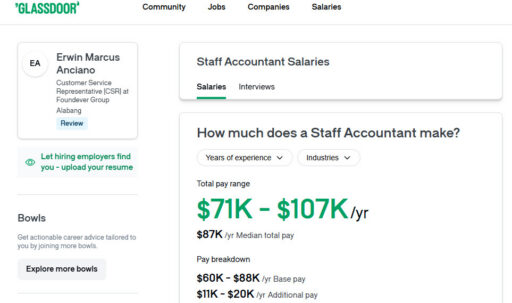
Cost: A staff accountant often starts around $70,000 a year, while a controller or senior hire commonly runs $120,000 to $180,000, before benefits and payroll taxes that typically add another 20 to 30 percent.
Best for: Later-stage SaaS companies with complex, high-volume finances.
2. Work With an Accounting Firm
You outsource bookkeeping, tax filing, and advisory to a firm that specializes in startups. A good one handles federal and state income tax, entity-level questions, and ongoing books, and coordinates with you on sales tax.
Pros:
- Access to a team of specialists for less than one full-time salary
- Built for startup and multi-state complexity
- Scales up or down with your needs
Cons:
- Less minute-to-minute availability than an employee sitting next to you
- Quality varies, so pick a firm that genuinely knows SaaS and startups
Cost: Usually a monthly or annual package, well below the loaded cost of an in-house hire. Different service tiers suit your needs, no matter where you are in your business venture.
Best for: SaaS startups that want expert tax and bookkeeping support without hiring internally.
For example, you can work with Cleer Tax, which works specifically with startups and foreign-owned founders, an area where SaaS tax gets especially involved.
If your company has foreign ownership, our foreign-owned LLC tax guide covers the extra filings that come with it.
3. DIY With Accounting/Tax Software
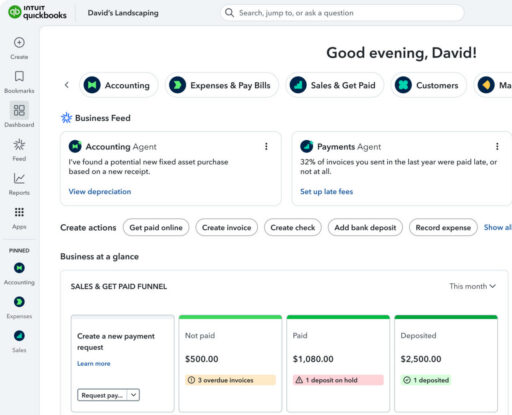
You run your own books and file with off-the-shelf tools such as QuickBooks, Xero, or consumer tax software. This gives you a lot of control over your books at a very reasonable cost, but it requires expertise and experimentation if you aren’t an accounting professional.
Pros:
- The cheapest option by far
- Full control and visibility into your numbers
- Perfectly fine when finances are simple
Cons:
- The learning curve is real, and tax rules are easy to get wrong
- No expert to catch missed deductions or filing obligations
- Breaks down fast once you add employees, funding, or multiple states
Cost: Bookkeeping software like QuickBooks commonly runs from about $30 to $200 a month, plus filing software or fees at tax time.
For founders taking this route, our 2026 startup taxes guide walks through the tax types and filings a new company faces.
Best for: Very early-stage, pre-revenue, or solo founders on a tight budget.
4. Hire a Part-Time or Fractional Accountant/CFO
A senior finance professional who works with you part-time or on retainer, handling strategy, forecasting, and oversight without the full-time salary. You get most of the benefits of an in-house financial officer, with better cost control and the expertise a growing company needs.
Pros:
- Senior expertise at a fraction of full-time cost
- Flexible, scalable scope
- A natural bridge between DIY and building a finance team
Cons:
- Limited hours and attention split across several clients
- Usually oversees the work rather than doing the day-to-day bookkeeping
Cost: A fractional CFO commonly runs $3,000 to $12,000 a month depending on scope.
Best for: Growing startups that need expert eyes but are not ready for a full-time hire.
5. Hybrid Approach (DIY Bookkeeping + Outsourced Tax Filing)
You keep the books in software and handle the tasks and financial duties yourself. When it comes to filing time, you hand the books over to a firm or accountant to review and file the returns.
Pros:
- Cheaper than full outsourcing
- Expert review where it matters most, at filing
- You stay close to your own numbers
Cons:
- You still carry the bookkeeping workload and its risk of errors
- Messy books make the filing handoff slower and more expensive
- Coordination gaps can let things slip between the cracks
Cost: Software cost plus a smaller filing or review engagement, comfortably under full-service pricing.
Best for: Founders comfortable with day-to-day tracking who want expert sign-off at filing time.
6. Specialized SaaS Sales-Tax Automation Software (Anrok, TaxJar, Numeral, etc.)
Software built specifically for SaaS sales tax. Tools like Anrok, TaxJar, Numeral, Kintsugi, and Commenda monitor where you have nexus, calculate the right rate per jurisdiction, and often file and remit for you.
Pros:
- Automates the hardest, most error-prone part of SaaS compliance
- Tracks nexus thresholds across many states as you grow
- Reduces audit risk on sales tax specifically
Cons:
- Solves only sales tax, not income tax, entity strategy, or bookkeeping
- Adds a recurring cost that grows with your footprint
- Still needs someone to interpret the edge cases
Cost: Pricing is usually usage-based, often starting at a few hundred dollars a month and rising with volume and the number of states you cover.
Best for: Multi-state SaaS companies that need to automate sales-tax and nexus tracking, typically alongside, not instead of, an accountant.
This is the key contrast with the accounting-firm option. Sales-tax software is excellent at what it does, but it is not a substitute for the best accounting firm for SaaS startups. Software handles sales tax; a firm handles income tax, structure, deductions, and the strategic questions software cannot answer.
Plenty of companies run both. For how sales-tax treatment varies by location, see our guide to corporate tax rates by state.
How to Choose the Right Tax Solution for Your SaaS Business
Match the option to where you are now, not where you hope to be:
- Pre-revenue or solo, tight budget: DIY software, moving to the hybrid approach as you grow.
- Early revenue, first hires, getting complex: an accounting firm or a fractional accountant.
- Selling into many states: add sales-tax automation on top of whichever advisory option you choose.
- Later-stage, high volume, complex structure: a full-time hire, often backed by both software and outside specialists.
The most common mistake is staying on DIY too long. The moment you take funding, hire employees, incorporate as a C Corp, or start selling across state lines, the cost of a missed filing or a botched entity election dwarfs the cost of getting help.
If you have reached that point, an accounting firm like Cleer Tax is usually the most efficient next step.
Final Thoughts
No single tax solution fits every SaaS business; the right one depends on your stage and complexity. Early on, software and a little discipline are enough.
As you take on revenue, employees, funding, and customers across state lines, the value of expert help climbs quickly, and the risk of going it alone climbs right along with it.
If your SaaS startup has outgrown the DIY stage and you want a team that knows startups to handle tax, bookkeeping, and advisory, Cleer Tax can help. Take a look at our Tax Prep Services Overview to see which level of support fits where you are now.
You can also contact our team for guidance on the best option for your SaaS business.
Frequently Asked Questions
What is the best accounting firm for SaaS startups?
The best fit is one that specializes in startups and understands SaaS, multi-state nexus, and entity strategy. Cleer Tax focuses on startups and foreign-owned founders, combining bookkeeping, tax filing, and advisory in one place.
How is SaaS taxed?
Two ways. Your company pays income tax on its profits based on its entity type. Separately, some states charge sales tax on SaaS subscriptions in states where you have nexus. The two are completely different taxes.
Does my SaaS startup need to charge sales tax?
Only where you have nexus and where that state taxes SaaS. Roughly 20 to 25 states tax it; others, including California, do not. Nexus comes from physical presence or crossing a state’s economic threshold.
Do I need a separate tool for sales tax compliance if I already have an accountant?
Often yes. Most accountants focus on income tax and books, while sales-tax software tracks nexus and files across many states. For multi-state SaaS, the two work together rather than replacing each other.
What tax mistakes do SaaS founders commonly make?
The usual ones: ignoring sales tax until an audit, misjudging where they have nexus, staying on DIY too long, confusing income tax with sales tax, and missing entity-specific deadlines like C Corp estimated payments.
Note: This article is for general informational purposes and isn’t tax, legal, or accounting advice. Tax rules change often, and your situation may differ. Talk to a Cleer Tax advisor before making decisions based on this content.