


Nobody plans to fall behind on bookkeeping. When you are building a business, managing a team, and trying to keep customers happy, updating financial records can easily fall to the bottom of your to-do list.
A few missed weeks can turn into several months, and before long, you are scrambling to find receipts and reconcile transactions when you should be preparing for tax season.
But falling behind does not mean your books are beyond repair. Catch-up bookkeeping helps you reconstruct missing financial records, correct accounting errors, and bring your books up to date.
For founders of U.S. LLCs and corporations, including foreign founders, getting current is particularly important ahead of the March and April 2027 federal tax deadlines that apply to many calendar-year businesses. The applicable deadlines depend on your entity’s tax classification and reporting obligations.
Key Takeaways:
- Catch-up bookkeeping fills gaps in your financial records, while bookkeeping cleanup corrects errors in existing records.
- Updated books help you prepare accurate tax returns, meet filing deadlines, and respond to investor or lender requests for financial statements.
- When to go DIY or hire a catch-up bookkeeping service.
What Is Catch-Up Bookkeeping?
Catch-up bookkeeping is the process of recording and organizing financial transactions you never entered into your accounting system or left incomplete in previous months or years.

The goal is to bring your financial records up to date so you can produce useful financial statements and give your tax preparer the information needed for the applicable tax filings.
Depending on your situation, catch-up bookkeeping may involve:
- Missing Records: Collect bank statements, receipts, invoices, and payment processor records.
- Transaction Entry: Record previously unentered business income and expenses.
- Payroll Records: Review payroll reports and record related transactions.
- Account Reconciliation: Match bank and credit card accounts against their statements.
- Error Correction: Investigate discrepancies and correct transaction classifications.
- Financial Statements: Prepare financial statements for the periods being reconstructed.
For example, suppose you started a U.S. LLC in 2024 but stopped updating your books after the first few months. By the end of 2026, you might have two years of transactions spread across your bank accounts, credit cards, and payment platforms.
Catch-up bookkeeping brings those records together, reconstructs the missing activity, and establishes a more reliable financial picture of your business.
Catch-Up vs. Cleanup Bookkeeping
Catch-up bookkeeping and bookkeeping cleanup are closely related, but they address different problems.
| Catch-Up Bookkeeping | Bookkeeping Cleanup |
| Records are missing or have not been entered. | Records exist but may be inaccurate or inconsistent. |
| Focuses on recording historical transactions. | Focuses on reviewing and correcting existing records. |
| May involve entering months or years of transactions. | May involve correcting duplicate entries, miscategorized expenses, or incorrect account balances. |
| Often needed when a founder has stopped maintaining the books. | Often needed when existing reports do not match bank statements or contain accounting errors. |
In reality, a business may need both services. A bookkeeper might first enter missing transactions, then clean up the records by correcting classifications and investigating discrepancies.
💡Pro Tip: Catching up on overdue records and correcting accounting errors can take significant time and energy. Consider working with a firm like Cleer Tax that offers catch-up bookkeeping and, for eligible tax clients, ongoing monthly bookkeeping to help you get your books stay on track.
6 Signs You’re Behind on Bookkeeping
You’ve been trying your best to be diligent in keeping up with your books. But you still feel like you’re falling behind. If you’re unsure, don’t wait until tax season to realize your books need attention.
Here are several warning signs that it is time to catch up:
1. Your bank and credit card accounts haven’t been reconciled
Reconciliation means comparing transactions and balances in your accounting records with your bank or credit card statements. If you haven’t reconciled your accounts in several months, you may not know whether your accounting software reflects the money moving through your business.
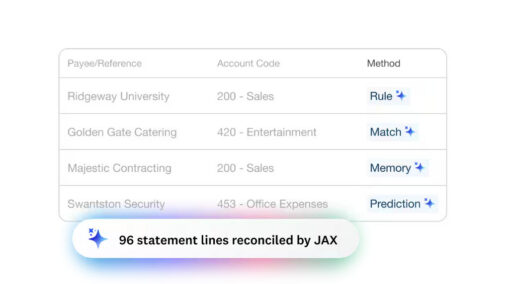
Image source: Xero.com
For example, your accounting software might show $20,000 in cash while your bank statements show a different balance. Outstanding payments, missing transactions, duplicate entries, or other discrepancies could explain the difference.
Until you investigate those discrepancies, your financial reports may not accurately reflect your business.
2. You can’t produce a current P&L or balance sheet
A profit and loss (P&L) statement summarizes revenue and expenses over a period. A balance sheet shows what your business owns and owes, along with its equity, at a particular point in time.
If you can’t produce these reports for the latest month or quarter, you may be missing important information about your company’s financial position. Without current reports, it becomes harder to:
- Evaluate spending.
- Understand profitability.
- Decide whether your business can afford another hire or a new investment.
Cash balance alone doesn’t tell you whether your business is profitable. Likewise, revenue growth does not necessarily mean you have enough cash to cover upcoming expenses.
3. Personal and business expenses are mixed together
Founders sometimes pay business expenses with personal credit cards or use business accounts for personal purchases. You can account for these transactions, but you need to identify and classify them appropriately.

cash, or misclassify money transferred between you and your business.
The IRS recommends keeping business and personal accounts separate and maintaining records that identify the source of business receipts and payments.
If you have mixed transactions, gather the relevant statements and receipts before attempting to categorize them. If a transaction’s purpose is unclear, ask your bookkeeper or tax professional how to record it.
4. Transactions are sitting uncategorized in your accounting software
Have you opened your accounting software and found dozens of transactions sitting in accounts such as:
- Uncategorized Expense?
- Uncategorized Income?
- Ask My Accountant?
These accounts can help you investigate transactions, but a growing backlog suggests your books may be incomplete.
For example, a payment received through a processor might be customer revenue, a refund, a loan, or an inter-account transfer. Recording it without understanding its source could distort your financial statements.
Review these transactions and gather supporting documentation before assigning categories. Avoid moving everything into a miscellaneous expense account just to clear the backlog.
5. Your tax preparer is asking for numbers you don’t have
Tax preparation gets harder when your financial records are incomplete. Your tax preparer may request:
- Annual revenue
- Deductible expenses
- Payroll information
- Account balances
- Details about transactions involving the business owner.
If you cannot produce those records, you may need to reconstruct your books before the return can be completed accurately.
The problem can be more complicated for foreign-owned businesses. Depending on the entity’s tax classification and activities, additional information reporting requirements may apply even when the business does not owe federal income tax at the entity level.
If this applies to your business, read Cleer Tax’s full guide to foreign-owned LLCs for more information about the relevant U.S. tax requirements.
6. An investor or lender has requested financials you can’t send
Fundraising and loan applications often require financial information beyond a bank balance or a revenue spreadsheet. An investor or lender may request a P&L, balance sheet, cash flow statement, historical financials, or explanations for unusual transactions.
If you cannot produce these reports, you may need to resolve missing records before you can respond confidently.
This does not automatically mean your business is in financial trouble. It may mean your recordkeeping isn’t ready for the level of scrutiny that comes with an external review.
Why You Need to Catch Up Before the 2027 Filing Deadlines
Falling behind on bookkeeping can make tax season more stressful, especially as filing deadlines approach. Up-to-date records give your tax preparer the financial information they need to prepare your returns and help you spot missing documents or discrepancies before they delay the process.
Your Business Tax Return Is Built From Your Books
Your bookkeeping records provide much of the financial information needed to prepare your business tax return.

Revenue, expenses, payroll, assets, liabilities, and other transactions may affect the information reported on your federal return. If the underlying records are incomplete or incorrectly classified, your tax preparer may need additional time to determine the appropriate figures.
The exact requirements depend on your entity type, tax classification, activities, and accounting method.
If you are unsure which rules apply to your business, start with Cleer Tax’s full guide to LLC taxes.
Key 2027 Federal Filing and Payment Deadlines for Calendar Year Taxpayers
Falling behind on bookkeeping can make tax season more stressful than it needs to be. Without complete and reconciled financial records, you may struggle to provide your tax professional with the information needed to prepare your return.
If your business uses a calendar tax year, several important federal filing and payment deadlines fall between February and October 2027. The deadlines that apply to you depend on your business’s tax classification, ownership, and reporting obligations.
These dates are based on the IRS draft of Publication 509 for 2027 and should be checked against the final publication.
Here are key dates to plan for:
| Deadline | Filing or payment requirement |
| February 1, 2027 | General deadline for employers to provide Forms W 2 to employees and file applicable copies with the Social Security Administration. This is also the general deadline for filing Form 1099-NEC with the IRS and providing it to recipients. |
| March 15, 2027 | General federal filing deadline for calendar year partnerships filing Form 1065 and S corporations filing Form 1120-S. Eligible businesses can request an extension by filing Form 7004. |
| April 15, 2027 | General federal filing deadline for calendar year C corporations filing Form 1120, individuals filing Form 1040, and foreign-owned U.S. disregarded entities (FODEs) required to file Form 5472 with a pro forma Form 1120. This is also the deadline for the first 2027 individual estimated tax payment. |
| June 15, 2027 | General deadline for the second 2027 individual estimated tax payment. |
| September 15, 2027 | Extended filing deadline for calendar year partnerships and S corporations that received a valid extension. This is also the deadline for the third 2027 individual estimated tax payment. |
| October 15, 2027 | Extended filing deadline for individuals filing Form 1040 and eligible calendar year C corporations filing Form 1120. This is also the extended deadline for FODEs required to file Form 5472 with a pro forma Form 1120, provided they timely filed Form 7004 to request an extension. |
Deadlines may also vary based on your circumstances and applicable filing requirements.
An Extension Gives You More Time to File, Not to Pay
If your books are incomplete, you may be concerned about missing the original tax return deadline. Eligible businesses can generally request an automatic extension for certain returns by filing Form 7004 by the applicable deadline.
An extension gives you additional time to file an eligible return. It generally doesn’t extend the time to pay federal income tax due. Don’t assume that requesting an extension resolves every filing or payment obligation. Information returns and special reporting requirements may have separate rules.
If you need more time, read Cleer Tax’s full guide to filing a tax extension and consult your tax professional about your specific circumstances.
How to Catch Up on Bookkeeping (Quick Checklist)
Catching up on bookkeeping starts with identifying missing records and working through them systematically. Use this quick checklist to organize your financial documents, correct errors, and bring your books up to date, whether you handle the work yourself or hire a bookkeeping service.

Keep in mind that every business is different, so the steps required may vary depending on your records, transaction volume, and accounting needs.
1. Identify Which Records Are Missing
☐ List the months or years that need updating.
☐ Identify any unfiled tax returns and upcoming deadlines.
☐ List all business bank accounts, credit cards, and payment processors.
☐ Review existing financial statements to identify potential gaps.
2. Gather Your Financial Records
☐ Collect bank and credit card statements.
☐ Download payment processor statements and transaction reports.
☐ Gather sales records, invoices, and customer receipts.
☐ Collect vendor invoices and expense receipts.
☐ Obtain payroll reports, loan statements, and records of owner contributions or withdrawals.
☐ Locate previous tax returns and financial statements.
3. Establish Your Starting Point
☐ Identify the last period when your books were accurate and reconciled.
☐ Review opening balances and previous reconciliations.
☐ Identify existing errors that need correction before entering new transactions.
☐ Determine which accounting periods need to be reconstructed.
4. Reconcile Your Accounts
☐ Compare accounting records with bank and credit card statements.
☐ Check for missing or duplicate transactions.
☐ Investigate unexplained differences and incorrect balances.
☐ Review transfers between accounts to avoid recording them as income or expenses.
☐ Document corrections and adjustments.
5. Categorize Transactions and Correct Errors
☐ Record missing business income and expenses.
☐ Assign appropriate categories to transactions.
☐ Review uncategorized transactions and investigate unusual items.
☐ Check loan repayments, equipment purchases, and owner transactions.
☐ Separate personal transactions from business expenses in your records.
☐ Ask a qualified professional about transactions with unclear accounting or tax treatment.
6. Prepare and Review Financial Statements
☐ Generate a profit and loss statement.
☐ Generate a balance sheet.
☐ Review account balances and investigate unusual figures.
☐ Gather supporting documents for transactions that need clarification.
☐ Share the updated records with your tax preparer if you are preparing a tax return.
Completing this checklist can help you identify gaps, organize historical transactions, and build more reliable financial records.
If the backlog spans multiple years, includes complicated transactions, or you’re approaching a tax deadline, consider working with a professional to help manage the process.
DIY vs. Hiring a Catch-Up Bookkeeping Service
Whether you should handle the backlog yourself depends on its size, complexity, and your available time.
DIY Bookkeeping
DIY bookkeeping may be reasonable if you have a small number of transactions, complete supporting documents, and a clear understanding of how to record them. It can also help you better understand your business finances.
However, DIY work gets harder when you need to reconstruct several years of records, investigate unexplained discrepancies, or prepare financial information for an upcoming tax deadline. It can be overwhelming to catch up on your bookkeeping while also running your business day to day.
Getting a catch-up bookkeeping service
This option may make sense when:
- You have months or years of unrecorded transactions.
- Your bank balances do not match your accounting records.
- You have several accounts or payment platforms to reconcile.
- You need historical financial statements for tax preparation or due diligence.
- You lack the time to complete the work before an important deadline.
Remember that bookkeeping and tax preparation are related but distinct activities. Confirm whether the provider offers only bookkeeping support or can also assist with the relevant tax preparation and filing through a separate engagement.
How Cleer Tax Can Help
Cleer Tax offers Bookkeeping Catch-Up services for businesses that need to reconstruct missing financial records and get current with their bookkeeping.
The process begins with gathering information about your business and the records that need attention.
Cleer Tax can set up a chart of accounts in Xero, organize transaction data imported from connected accounts or uploaded files, and categorize transactions based on the information available. The appropriate package depends on the volume of transactions and the scope of the work required.
To help prevent another backlog, Cleer Tax also offers Monthly Bookkeeping services to support ongoing recordkeeping. Contact Cleer Tax to discuss your bookkeeping needs and determine which service fits your business.
Frequently Asked Questions about Catch-up Bookkeeping
What is catch-up bookkeeping, and is it worth it?
Catch-up bookkeeping records missing historical transactions and updates incomplete financial records. It can help you prepare tax returns, review business performance, and provide financial statements for fundraising or loan applications.
What does bookkeeping cleanup involve?
Bookkeeping cleanup corrects errors in existing records. This may include fixing miscategorized transactions, removing duplicates, reconciling accounts, and investigating incorrect balances.
How do I clean up my books from previous years?
Gather bank statements, receipts, invoices, and previous financial reports. Record missing transactions, reconcile accounts, and investigate discrepancies. Consult your tax professional before changing records that affect previously filed returns.
How long does catch-up bookkeeping take?
The timeline depends on transaction volume, how far behind you are, and the condition of your records. A straightforward backlog may take days, while complex cases can take weeks or longer.
How much does catch-up bookkeeping cost?
Costs depend on transaction volume and project complexity. Cleer Tax’s published packages start at $300 for up to 100 transactions. Check the current service page for package details and pricing.
How can I maintain my books after catch-up bookkeeping?
Reconcile bank and credit card accounts monthly, categorize transactions regularly, organize receipts and invoices, and review financial statements. Cleer Tax also offers monthly bookkeeping services for ongoing support.
Disclaimer:
This article is for general informational purposes and isn’t tax, legal, or accounting advice. Tax rules change often, and your situation may differ. Talk to a Cleer Tax advisor before making decisions based on this content.